The Basics of PCB Trace Impedance Matching
What is Impedance Matching?
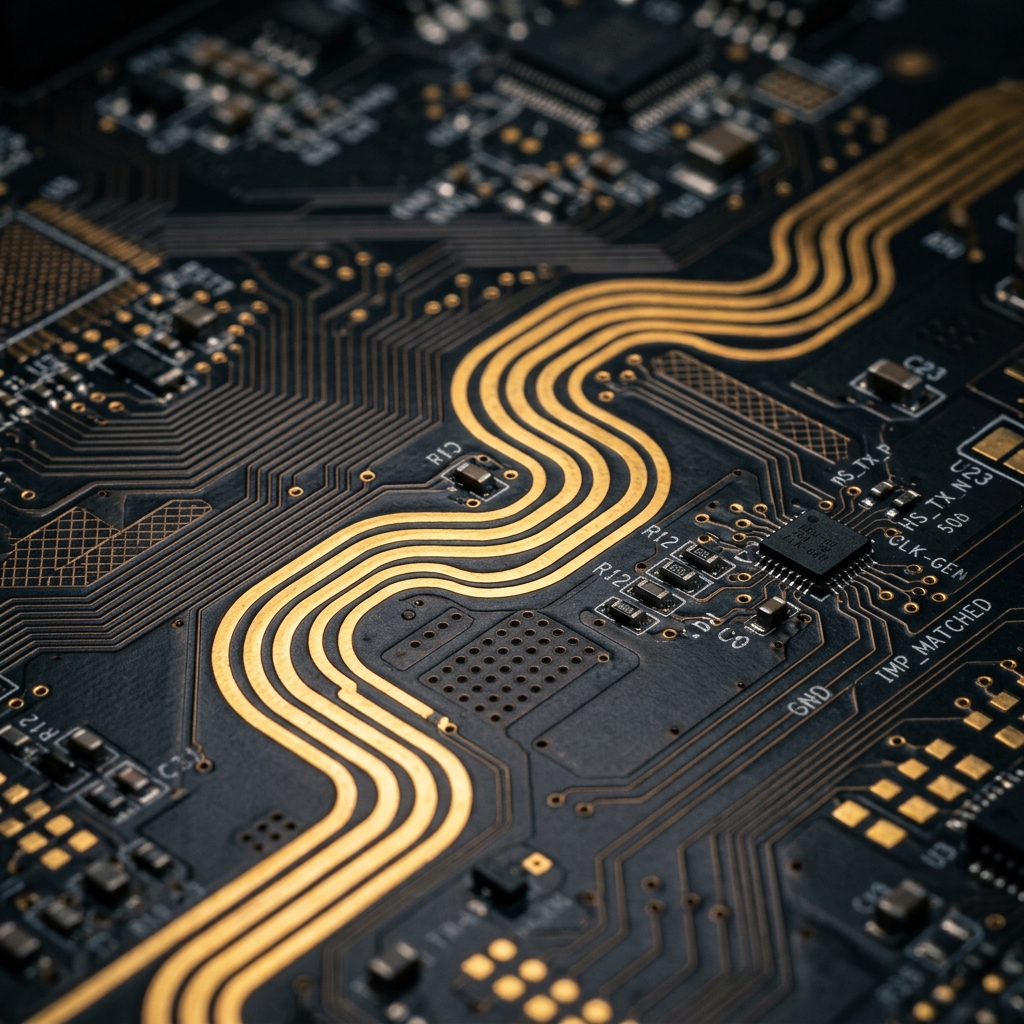
In high-speed PCB design, a trace is no longer just a simple wire; it becomes a transmission line. If the impedance of the trace doesn't match the source and the load, signals will reflect back, causing ringing, EMI, and data corruption.
Calculating Trace Impedance
Trace impedance depends on the trace width, trace thickness, the dielectric constant of the PCB material (usually FR-4), and the distance to the reference plane. Tools like our Impedance Calculator can help you determine the exact trace width needed for a 50-ohm or 90-ohm differential pair.
Best Practices
Always route high-speed signals over an unbroken ground plane. Avoid 90-degree corners, and keep differential pairs perfectly symmetrical and length-matched.
Electronics