Mastering RC Filters: High Pass, Low Pass, and Band Pass Applications
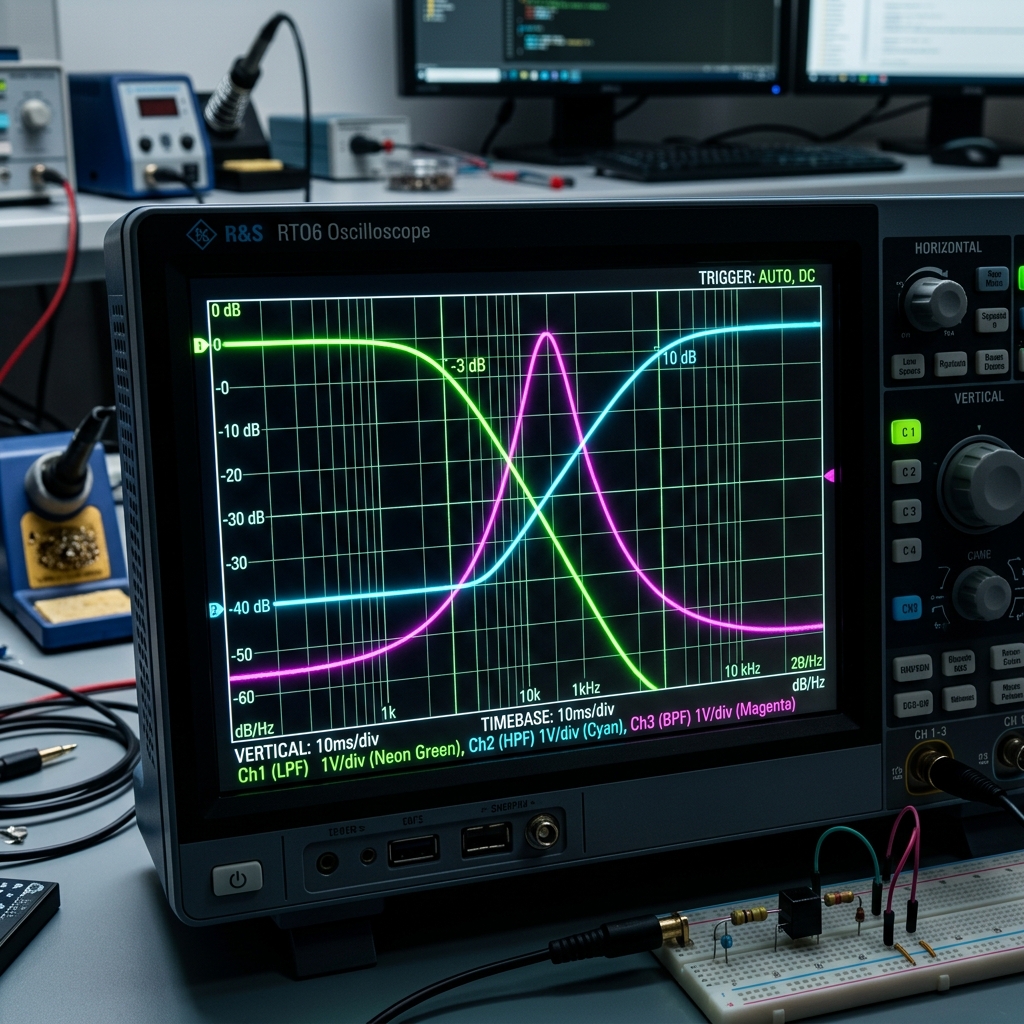
The Power of Passive Filtering
In electronics engineering, separating wanted signals from unwanted noise is a daily challenge. The humble Resistor-Capacitor (RC) filter is one of the most elegant and cost-effective solutions to this problem.
Low Pass Filters: Taming the Noise
A Low Pass Filter (LPF) allows low-frequency signals to pass while attenuating high frequencies. They are universally used for anti-aliasing before an Analog-to-Digital Converter (ADC) and for smoothing out Pulse Width Modulation (PWM) signals into steady DC voltages.
High Pass Filters: Blocking the Bias
Conversely, a High Pass Filter (HPF) blocks low frequencies (especially 0 Hz, or DC) and allows high frequencies to pass. This is crucial in audio amplifiers where you must block DC bias voltages from reaching the speaker, which could damage the voice coil.
Band Pass Filters: Honing In
By cascading a High Pass and a Low Pass filter, you create a Band Pass Filter. This allows only a specific 'band' of frequencies to pass through. This is widely used in radio receivers and audio graphic equalizers to isolate specific frequency ranges.